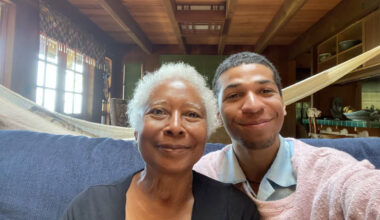
A life built in the everyday
I am drawn to people whose influence does not shout. Usha Scott belongs to that rare company. Her story is not framed by spectacle, but by rhythm. It is a life measured in sermons, prayers, family ties, church meetings, and the slow work of helping people stand steady when the ground feels uncertain. That kind of leadership can look small from far away. Up close, it is as sturdy as oak roots under winter soil.
What makes Usha Scott compelling to me is the way her public identity seems to gather strength from private consistency. She is not presented as a celebrity pastor, nor as a personality shaped for the camera. She appears instead as a pastor who has spent years refining a language of care. Her ministry feels less like a stage performance and more like a lamp left burning in a window, visible because it has stayed lit for a long time.
In an age that often rewards noise, that matters. It tells me that faith can still be built through repetition, patience, and a disciplined willingness to show up.
Leadership with a human pulse
I think one of the most interesting things about Usha Scott is the texture of her leadership. She seems to occupy the space where conviction meets practicality. That is not a glamorous place, but it is a necessary one. Church life needs people who can teach, but it also needs people who can listen. It needs doctrine, but it also needs gentleness. It needs a steady hand on the wheel when the road is crowded and unpredictable.
At The Bridge Church, Woodford, her role as co-lead pastor suggests a model of partnership rather than solitary authority. That itself is meaningful. Shared leadership can become a living metaphor for trust. It says that ministry is not a single voice echoing into a hall. It is a woven cloth, made stronger by its strands.
I find it telling that her themes often center on prayer, resilience, and daily faithfulness. Those are not abstract ideals floating above ordinary life. They are tools. Prayer becomes breath. Resilience becomes posture. Faith becomes a habit of walking forward when no dramatic answer has arrived. In that sense, Usha Scott’s teaching feels like a field guide for the soul.
The newer public structure around the church also adds another layer to the picture. A more formal leadership team and charitable framework suggest a ministry that has matured into a broader institutional shape. That kind of development matters because churches, like families, change as they grow. What begins as local shepherding can become a wider network of service, governance, and responsibility. Usha Scott appears to sit within that growth not as an ornament, but as one of its anchors.
Family, heritage, and the power of continuity
I am also interested in the family dimension of Usha Scott’s life because it reveals another kind of influence. Family life is often where values become visible before they become public. The details around her husband, children, and wider family point to a household shaped by ministry, migration, and cultural memory.
Her heritage, with roots in Gujarati Indian identity and a beginning in Uganda before life in the United Kingdom, carries the weight of movement across continents. That kind of background can produce a layered sense of belonging. It can also create a strong instinct for preservation. When a family crosses borders, it often carries language, faith, food, memory, and discipline like precious cargo. These things do not simply survive the journey. They are reinterpreted in the new place.
I imagine that heritage is part of the emotional architecture around Usha Scott. It may help explain the seriousness with which family, church, and community are held together in her story. Migration often teaches people how to build with what they have, and how to make a home in the middle of change. That lesson seems to echo through the atmosphere around her.
Her daughter Naomi Scott, already well known in public life, adds another dimension to the family portrait. But even there, I do not see a celebrity family trying to convert public attention into a brand. Instead, I see a family where public visibility grew around a quieter center. The spotlight touched the edge of the household, yet the household itself remained oriented around faith and service. That is not common. It is, in a way, admirable.
The mention of another family member in church leadership also suggests a wider pattern of continuity. It makes the family feel less like separate individuals with unrelated paths and more like branches of the same tree, growing in different directions while drawing from a shared root system.
What her teaching seems to offer now
The recent sermons and messages associated with Usha Scott show a pattern that feels timely. Prayer, waiting, discernment, and resilient thinking are not niche concerns. They are survival skills for modern life. Many people live with noise in their pockets, pressure on their schedules, and uncertainty in their minds. In that context, a pastor who speaks calmly about inner strength is offering something valuable.
I am especially struck by the way her ministry seems to translate scripture into ordinary experience. That is harder than it sounds. It is easy to speak in broad spiritual phrases. It is more difficult to speak in a way that reaches someone trying to parent, work, grieve, hope, or recover. Usha Scott’s appeal seems to lie in that translation work. She takes the language of faith and sets it beside the furniture of daily life.
There is a kind of beauty in that. It reminds me of a bridge at dusk. A bridge is not impressive because it is loud. It is impressive because it holds. It carries people across something they might not cross alone. Usha Scott’s ministry seems to do that kind of work: connecting scripture to stress, prayer to practice, and belief to action.
Community leadership in a changing church landscape
Churches do not remain still. They evolve with the needs of their people, the pressures of the city around them, and the responsibilities of public life. The Bridge Church’s wider leadership structure and charitable organization suggest a ministry that has become more formalized and outward-facing. That shift is not just administrative. It reflects a change in scale and vision.
For Usha Scott, this likely means that her role now sits within a larger ecosystem of service. Pastoral care is still there. Teaching is still there. But these now exist alongside governance, organizational planning, and public accountability. That combination can be demanding. It requires a leader to think like a shepherd and a steward at the same time.
I find that dual role fascinating. A shepherd watches the flock. A steward protects the house. One is relational, the other structural. Usha Scott seems to be involved in both worlds. That blend matters because communities need hearts and systems. Compassion without structure can fray. Structure without compassion can harden. The best ministries hold the two together like matched weights on a balance beam.
FAQ
Who is Usha Scott?
Usha Scott is a pastor associated with The Bridge Church, Woodford, where she serves in leadership alongside her husband. Her public identity is shaped by ministry, family, and teaching.
What is she known for?
She is known for pastoral leadership, teaching on prayer and resilience, and for being part of a church-centered family life that has drawn interest beyond the local congregation.
What themes appear most often in her ministry?
Prayer, practical faith, mental steadiness, spiritual discipline, and the everyday work of living with integrity appear as recurring themes in her teaching.
How does her family background shape her story?
Her background brings together Gujarati Indian heritage, a birth in Uganda, and later life in the United Kingdom. That history gives her story a layered cultural depth and a sense of continuity across movement and change.
What is distinctive about her leadership style?
Her style appears calm, grounded, and relational. I read it as a form of leadership that values clarity without harshness and conviction without performance.
Why does her story attract attention beyond the church?
Part of the interest comes through her family connection to Naomi Scott, but the deeper reason is the way her own ministry presents a steady and quietly influential model of faith-based leadership.
Is her ministry mainly public or private?
It seems rooted in church life more than in personal publicity. Her public presence is connected to sermons, broadcasts, and pastoral work rather than a broad personal media profile.
What makes her story relevant now?
In a time when many people are tired, distracted, and uncertain, Usha Scott’s emphasis on resilience and prayer speaks directly to the pressures of modern life.
Giving Your Fleet Trucks A Second Chance With Refurbished Ecms
Making Your 401k Investment Menu Work Smarter