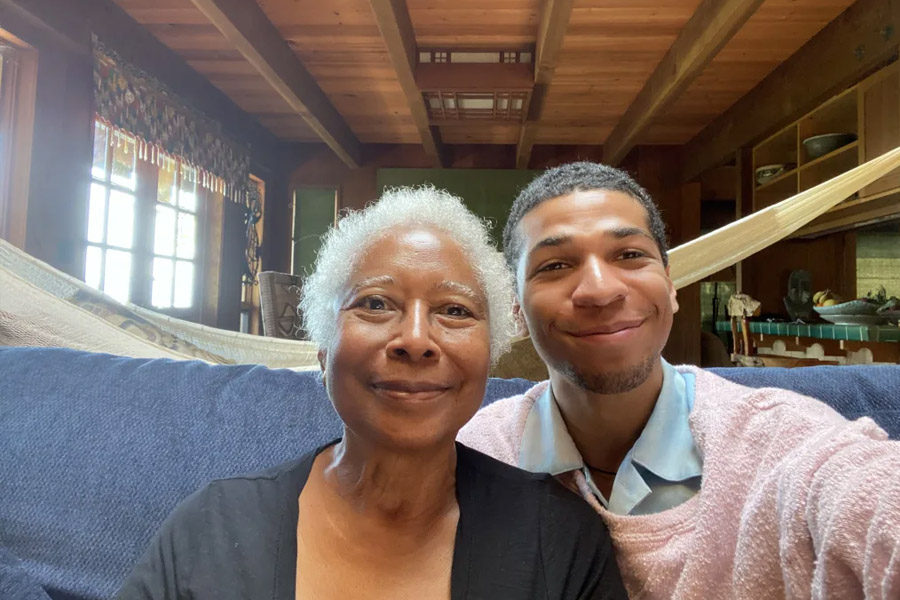
A name that carries weight, but not noise
I keep thinking about how some lives arrive with a soundtrack already attached. Tenzin Walker is one of those names. It carries family history, public curiosity, and a kind of inherited brightness that can feel like a spotlight from a distance. Yet what stands out to me is not noise. It is restraint. It is the shape of a person moving through a larger story without letting the story swallow the person.
That contrast matters. In an age that rewards oversharing, a low-profile young adult can feel almost radical. Tenzin Walker appears to be building a life in a quieter register, one tuned to study, service, and practical purpose. I find that more interesting than any glossy profile could be. The silence around a person can sometimes say more than the chatter.
Growing up inside a family of public minds
When I look at Tenzin Walker’s family background, I do not see a static legacy. I see a living workshop. There is writing, law, activism, and spiritual practice in the same room. That kind of environment can shape a person in subtle ways. It does not simply hand down a surname. It hands down habits of thought.
Being connected to Rebecca Walker and Alice Walker places Tenzin inside a lineage where words matter and justice is never just an abstract ideal. In families like this, dinner conversations can sound like miniature seminars. Ideas do not sit still. They move. They challenge. They ask for a response. A child raised in that atmosphere may learn early that identity is not a costume. It is a craft.
I think this may help explain why Tenzin Walker’s public image feels less like celebrity and more like continuity. He seems to belong to a family that treats public life as responsibility rather than performance. That is a rare inheritance. It is also a heavy one.
The meaning of a private path in a visible family
Privacy is often mistaken for emptiness. I see it differently. Privacy can be a kind of boundary-making, a way to keep the soil intact while the rest of the world keeps reaching over the fence. For someone like Tenzin Walker, that boundary appears especially important.
A person linked to a famous family can easily become a symbol before becoming a self. That is the old trap. People rush to decide what the name means and forget the person who has to live inside it. Tenzin Walker’s limited public footprint suggests a different instinct. Instead of turning himself into a public spectacle, he seems to have chosen a slower route, one where the scaffolding of identity is built before the curtain rises.
That choice is not passive. It is disciplined. It says something about values. It suggests comfort with substance over shine. In a culture that worships the loudest voice in the room, steadiness can look almost mysterious. But steady things hold bridges, and they hold families, and they hold institutions together when applause has faded.
Health policy as a form of care
What interests me most is the direction of Tenzin Walker’s emerging academic focus. Health policy, public health, and human rights may sound like separate lanes, but they are really parts of the same road. They all ask a common question: who gets to live with dignity, and what systems make that possible?
That question is not theoretical. It lives in emergency rooms, in rural counties, in staffing gaps, in transportation barriers, in the distance between a clinic and the people who need it. Health policy is often described with sterile language, but the consequences are deeply human. A policy can act like weather. It can open a path or close one. It can bring relief or expose weakness.
If Tenzin Walker is moving toward this work, I read that as a sign of seriousness. It is one thing to admire justice in the abstract. It is another thing to study access metrics, community outcomes, and the logistics of care. That is where compassion becomes operational. That is where ideals are tested against budgets, geography, and time.
I also think this focus fits the shape of his public identity. The people most drawn to systems work are often the ones who understand that change rarely arrives as a thunderclap. It comes like water through stone. It needs patience. It needs evidence. It needs a willingness to stay with problems others would rather decorate or ignore.
The power of naming and the layered self
The use of both Tenzin Walker and Tenzin Rangdrol invites a deeper reading. Names are never just labels. They are containers. They carry family memory, spiritual meaning, cultural bridgework, and sometimes private reinvention. A person who appears under more than one name may be doing more than managing public identity. He may be holding several truths at once.
I find that compelling. Many people spend their lives trying to simplify themselves for public consumption. But some lives are not simple, and that complexity is not a flaw. It is texture. It is depth. It is the grain of wood that makes a table strong.
For Tenzin Walker, the coexistence of names may reflect a bridge between inherited family visibility and a more contemplative or spiritual tradition. That blend feels important. It reminds me that identity is often less a straight line than a woven fabric. One thread may come from lineage, another from practice, another from ambition, and another from the quiet acts that never make it into captions.
What a student profile can reveal
There is a tendency to dismiss student years as a holding pattern before the real story begins. I never buy that. For many people, especially those entering fields like public health and policy, the student phase is the real foundation. It is where habits of analysis, empathy, and collaboration get built.
In Tenzin Walker’s case, the campus setting appears to matter. A research role, student work, and community-oriented involvement tell me he is not waiting for adulthood to start. He is already working inside it. Even modest academic roles can be meaningful when they connect to real problems. A lab, a journal, a service project, or a peer initiative can be a small engine with a wide reach.
That matters because public service is often assembled from ordinary parts. It is not usually born in one grand act. It is built from repeated decisions. Show up. Read carefully. Listen longer. Ask better questions. Follow the evidence. Stay close to people who live the problem rather than only describing it.
Why family legacy does not need to become destiny
When someone comes from a prominent family, outsiders often assume the story is already written. I think that assumption is lazy. Legacy gives context, not script. It creates pressure, yes, but it can also create range. A person can honor their family without becoming a replica of it.
Tenzin Walker seems especially interesting because he sits at the meeting point of public inheritance and private formation. There is enough visibility to attract attention, but not so much that the individual vanishes into the brand of the family. That middle ground is fragile. It requires judgment. It requires saying yes to some forms of recognition while refusing others.
I respect that balance. It suggests that the center of gravity is not fame. It is purpose. And purpose, unlike fame, can survive without a crowd.
FAQ
Who is Tenzin Walker in public life?
Tenzin Walker appears to be a young American student and emerging public-health oriented figure whose interests connect health policy, public health, and human rights. He is also publicly known through his family background.
Why does Tenzin Walker attract attention?
He draws attention because of his connection to Rebecca Walker and Alice Walker, but also because his own academic and community interests point toward serious policy and service work. That combination makes him more than a family reference.
What makes Tenzin Walker different from a typical public figure?
He seems to maintain a low-key public presence. I see less performance and more focus. That makes his profile feel grounded, especially compared with the usual rush of online visibility.
What can be inferred from Tenzin Walker’s academic interests?
His interests suggest a concern with systems, equity, and practical care. Health policy and public health often demand a willingness to study how real people experience institutions, especially when access is uneven.
Why is the name Tenzin Rangdrol important?
The alternate name suggests an identity that may carry spiritual or cultural meaning alongside family identity. It adds another layer to how Tenzin Walker is publicly understood.
Does Tenzin Walker seem to seek celebrity?
Not from the available picture. He appears to move in academic and community spaces rather than entertainment or influencer culture. That gives his public presence a quieter, more deliberate tone.
What does his family background add to his public story?
It adds context, but not a full explanation. Being connected to writers, activists, and a civil-rights attorney places Tenzin Walker in a lineage of public thought and civic engagement. Still, his own path looks distinct and personal.
Why does Tenzin Walker’s story feel relevant now?
Because it reflects a modern tension between visibility and substance. I think many people are searching for ways to matter without being consumed by publicity, and his path speaks to that balance.
Building Search Visibility Without Chasing Magic Tricks
How High Performing Airports Keep The Chaos Moving
When Your Smile Is Telling You More Than You Think
How To Turn A Sports Room Into A Personal Hall Of Fame
How Smart Water Management Helps Concrete Outlast The Weather