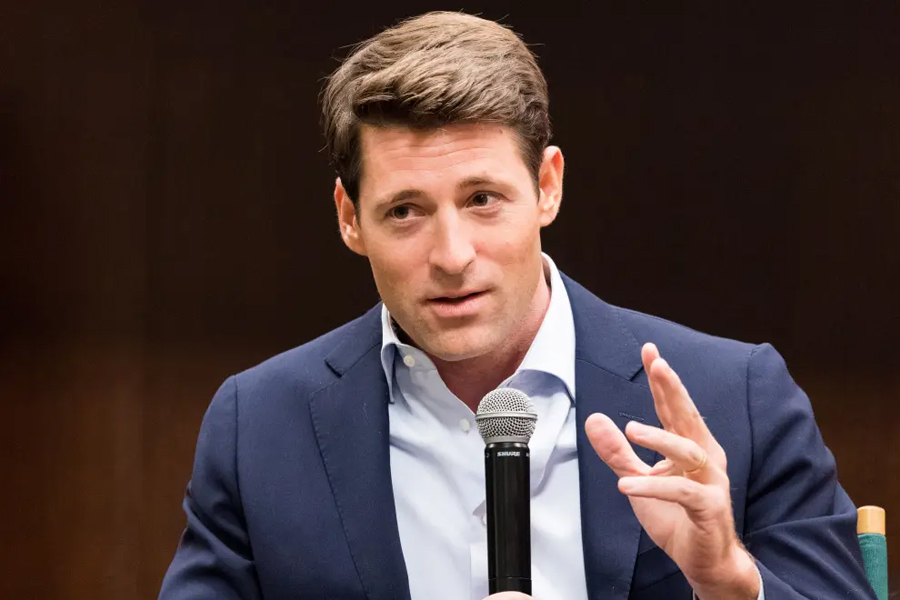
A short portrait
Anthony Edward Dokoupil — known in his operating years as “Big Tony” — is a figure who reads like a weathered map of America’s late-20th-century drug trade: routes inked across coastlines, fortunes built and washed away by tides of addiction and enforcement, and family lines that intersect pain with sporadic reconciliation. Born in 1946 in northern New Jersey, the second of four children in a Roman Catholic household, his life moved from classrooms to convoys, from graduate-school promise to multi-ton shipments of marijuana and, eventually, to poverty and estrangement.
Basic information
| Field | Detail |
|---|---|
| Full name | Anthony Edward Dokoupil |
| Nickname | “Big Tony” |
| Born | 1946 (northern New Jersey) |
| Family | Ex-wife: Ann; Son: Anthony Edward “Tony” Dokoupil Jr.; 4 grandchildren |
| Primary activity (historical) | Marijuana smuggling and distribution (1970s–1980s) |
| Peak earnings (reported) | Roughly $2.5 million in his heyday (equivalent cited as ≈$6 million today) |
| Major arrest | 1992 — conspiracy charges involving ~35,000 pounds |
| Legal outcomes | Jail time (≈9 months), rehab (≈6 months), probation (~3 years) |
| Last public mention | Circa 2019 — visited son’s family |
Timeline in dates and numbers
| Year | Event |
|---|---|
| 1946 | Birth in northern New Jersey. |
| 1964 | Experimented with heroin while at Loyola University (age 18). |
| 1968 | Graduated St. Peter’s College (English). |
| 1970 | Dropped out of grad school; moved to Milford, CT. |
| 1974–1975 | Began small-scale smuggling (suitcases, rental cars). |
| 1976 | Used Winnebagos to move marijuana from Florida Keys to Miami. |
| 1981 | Established housing companies for laundering; moved family to Miami. |
| 1983 | Orchestrated an 11-ton shipment (reported payday ~$500,000). |
| 1986 | Led a 17.5-ton shipment (reported payday ~$750,000); abandoned family shortly after. |
| 1987–1989 | Multiple failed rehab attempts; domestic violence and separation. |
| 1989 | Ex-wife Ann remarried (Ray). |
| 1992 | Arrested in Miami; assets seized; Hurricane Andrew destroyed some property. |
| 2001 | First meaningful phone contact from son Tony (age 20). |
| 2007–2009 | Sporadic reconnections; meetings in Boston and elsewhere. |
| 2014 | Son Tony published a memoir chronicling the story. |
| 2019 | Visited son Tony’s family after the birth of a grandchild. |
| 2025 (approx.) | Living privately; no public obituary found; roughly 79 years old. |
Family map: names, roles, and tensions
| Family member | Relationship | Notes & numbers |
|---|---|---|
| Ann | Ex-wife | Met in early 1970s; public school teacher; remarried in 1989; raised Tony largely as a single parent. |
| Tony Dokoupil (Jr.) | Son | Born December 24, 1980; broadcast journalist; author of a memoir detailing his father’s life. |
| Unnamed Child 1 | Grandchild | One of two children from Tony’s first marriage; resides in Israel. |
| Unnamed Child 2 | Grandchild | Second child from Tony’s first marriage; also in Israel. |
| Theodore “Teddy” Dokoupil | Grandchild | Born c. 2019 to Tony and Katy Tur. |
| Eloise Dokoupil | Grandchild | Born c. 2021 to Tony and Katy Tur. |
| Ray | Ann’s second husband | Former smuggling associate who later cooperated with authorities; married Ann in 1989. |
| Three unnamed siblings | Siblings | Anthony was the second of four children. |
| Great-uncle Anthony | Relative | Smuggled whiskey during Prohibition — a historical echo in the family. |
The business of smuggling — scale, methods, numbers
Big Tony’s operation evolved in scale and ingenuity. What began in 1974–1975 as suitcase runs and rental-car transfers became by the early 1980s an industrialized pipeline:
- Reported shipments: single loads documented at 11 tons (1983) and 17.5 tons (1986).
- Aggregate distribution claimed in accounts: over 50 tons moved across the U.S. Northeast over a decade.
- Typical tactics: convoys of vehicles, Winnebagos, inflatable rafts, sailboat drop-offs from the Caribbean, safe houses, and the use of front companies (housing firms formed c. 1981) for laundering proceeds.
- Financial peak: around $2.5 million in cash proceeds, with lifestyle expenses that included yachts, Mercedes automobiles, private schools, and Caribbean vacations.
- Downfall: a combination of addiction-fueled spending, failed business ventures (including a Yukon gold mine), asset seizures by federal authorities, and natural disaster (Hurricane Andrew) destroyed remaining holdings.
That arithmetic of risk and reward reads like a ledger of excess — millions gained, millions dissipated, and legal costs that compounded personal losses.
Personality and patterns
He was both architect and arsonist of his own fortunes. Inventive where logistics were required, reckless where substances were involved. His philosophy—seen in interviews and family recollections—positioned marijuana as a softer drug bound to countercultural ideals of “peace and love,” in contrast to his destructive addictions to cocaine and crack. He evaded capture for many years, a feat that requires operational skill. Yet the same man who navigated convoys and offshore deliveries could not navigate family responsibilities or recovery from addiction.
His private life was punctuated by episodes of abuse, infidelity, and abandonment. He left his family around 1986 when his son was six; that abandonment became the axis on which his son’s later writing and public reflections turned. Reconciliation was partial and episodic: phone contact in 2001, visits in the late 2000s, and a noted visit in 2019 after his first grandchild’s birth.
Legal arc: charges, penalties, and aftermath
- Arrest year: 1992. Charged with a conspiracy that involved tens of thousands of pounds of contraband (reported figure: 35,000 pounds).
- Immediate consequences: jail time (≈9 months), followed by court-ordered rehabilitation (≈6 months) and probation (≈3 years).
- Asset impacts: properties and cash seized by federal authorities; Hurricane Andrew further erased assets held in Miami.
- Later life: limited formal income; reports indicate he lived in subsidized housing in the late 2000s and subsisted with minimal possessions.
Public attention versus private life
Public attention on Anthony has always been eclipsed by his son’s career. Tony Dokoupil Jr. — born December 24, 1980 — built a public life as a journalist and author, and his memoir served as the primary lamp by which the father’s story reached wider audiences. Media attention tends to center on Tony’s work, with the father appearing mainly as the subject of recollection rather than a public figure actively engaged in current life. After 2019, public mentions of Anthony are sparse; the family narrative has settled into private recollections and intermittent contact.
Portrait in fragments
Numbers and dates map a route: 1946 to 2025, small suitcase runs to 17.5-ton hauls, $2.5 million amassed then lost, nine months in jail, six months in rehab, three years of probation. The human picture resists tidy arithmetic. There are the children who grew up believing one story and learned another; a wife who kept household life afloat; a son who turned family trauma into a book; grandchildren born into a world their grandfather once supplied with illegal riches and then abandoned. The past hangs like a faded banner across the present — tattered but still legible, fluttering in family rooms and on pages where memory rewrites itself with each telling.